

Welcome to
Providencia
Island
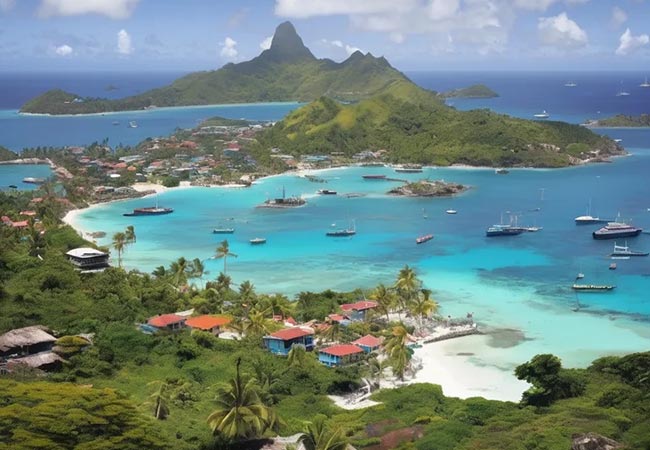
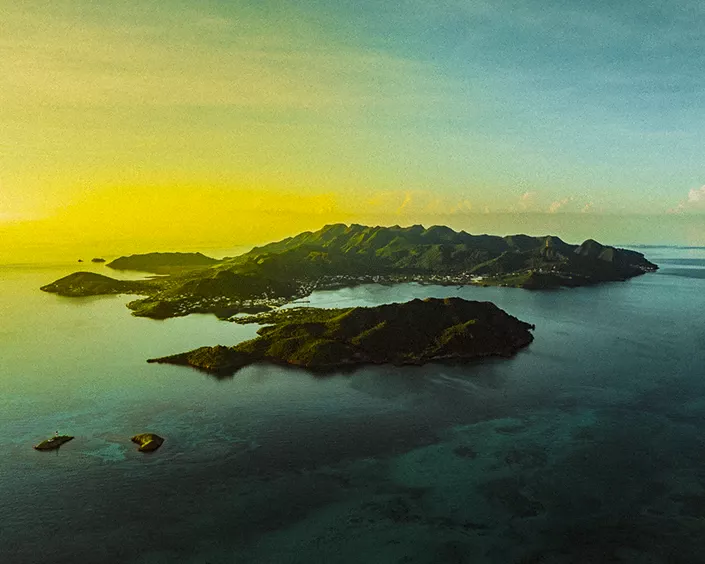
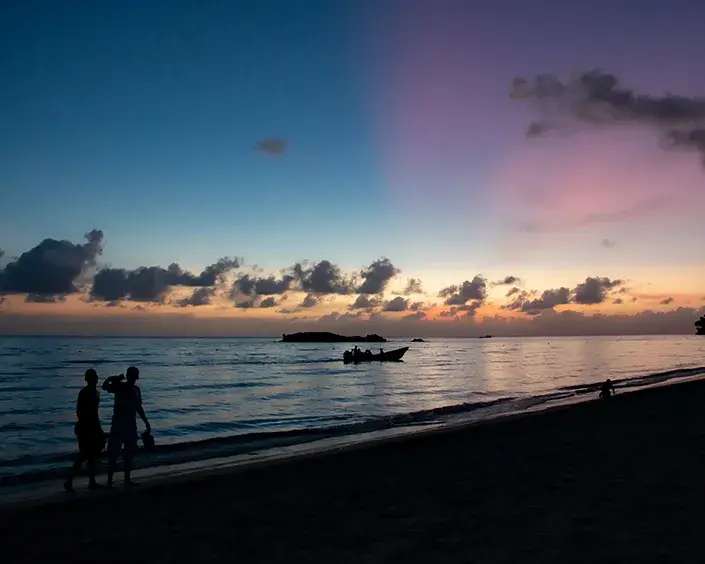
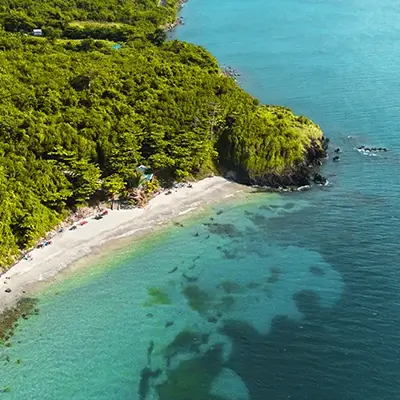
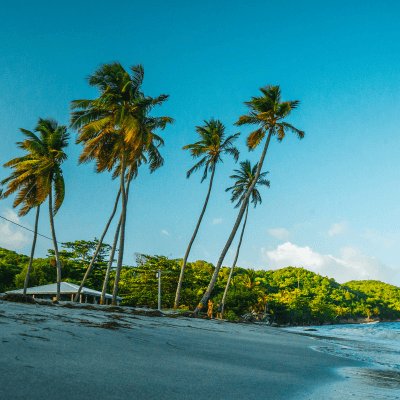
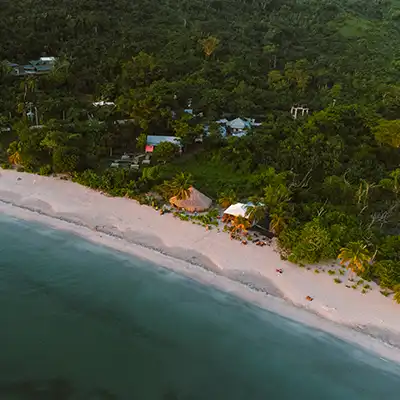
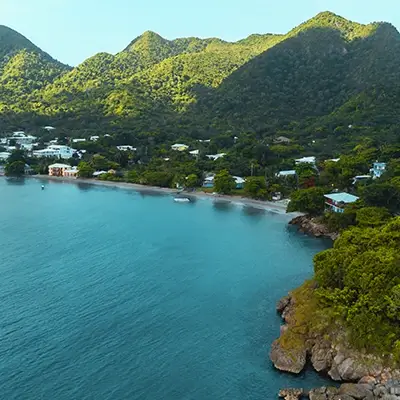
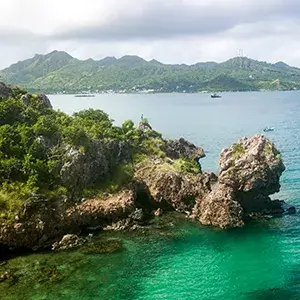
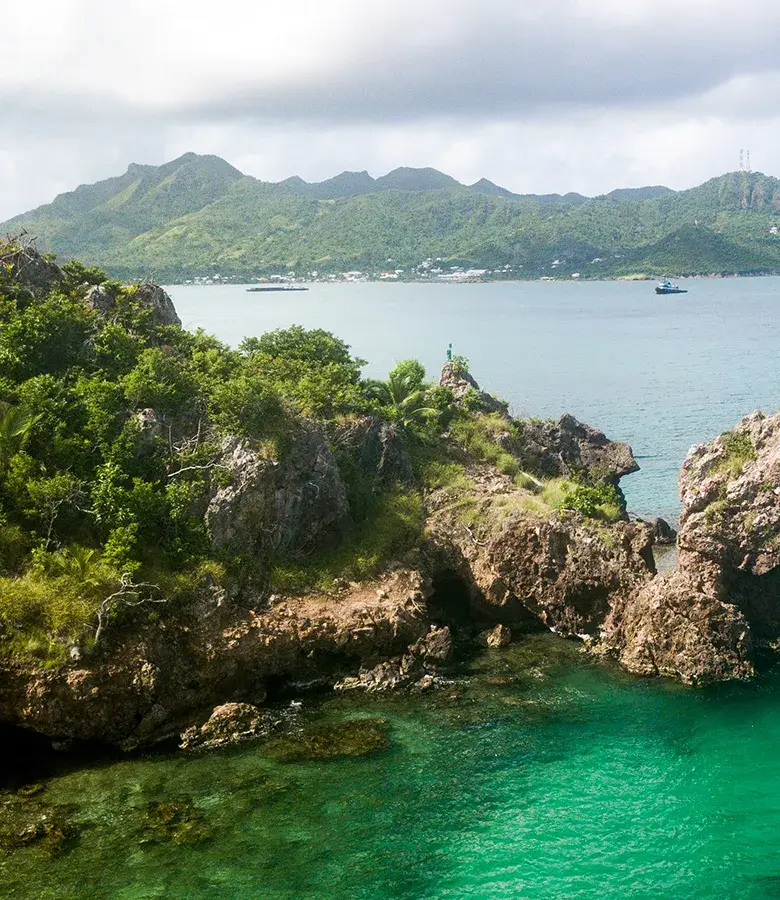
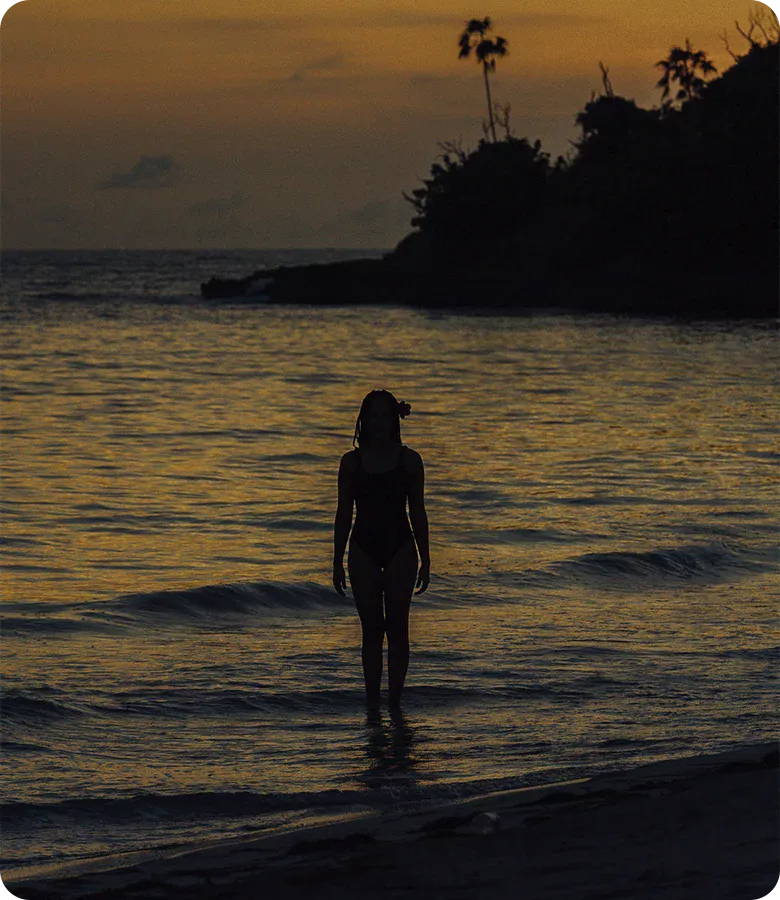
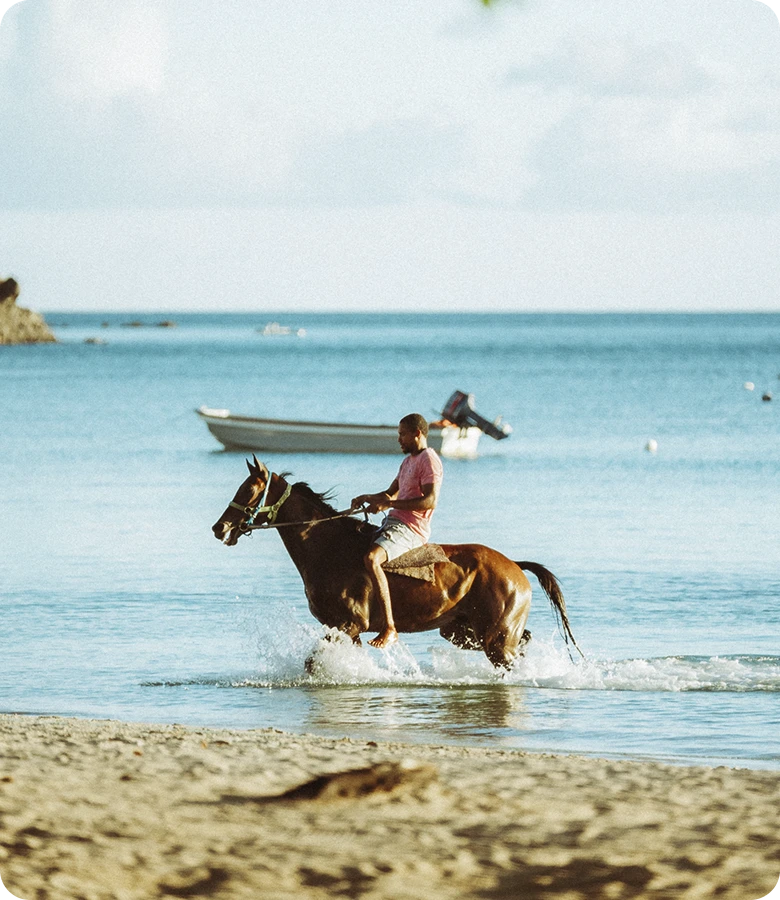
Discover the essence of Providencia and Santa Catalina, where history, culture, and nature come together in an oasis of peace in the Colombian Caribbean.
Explore a vibrant territory where every corner tells its own story, every view inspires you, and every resident welcomes you with the characteristic warmth of the raizal people.
Direct flight to Providencia from San Andrés
Direct flight to Providencia from San Andrés Flights operate from Gustavo Rojas Pinilla International Airport (ADZ) to El Embrujo Airport (PVA), lasting 20 to 30 minutes, with a minimum of three daily flights by SATENA.
You can purchase your ticket at the San Andres airport or on the SATENA airline website.
Local mobility
Local mobility Once on the island, you’ll find many ways to get around, such as taxis, motorcycle taxis, tuk-tuks, or you can rent a motorbike or a “mule cars” to explore every corner of the island.
Keep in mind that, although it’s a small island, distances between places can be long.
Arrivals and
local mobility
Transportation to Providencia can be done from San Andrés Island by air.
Our richness
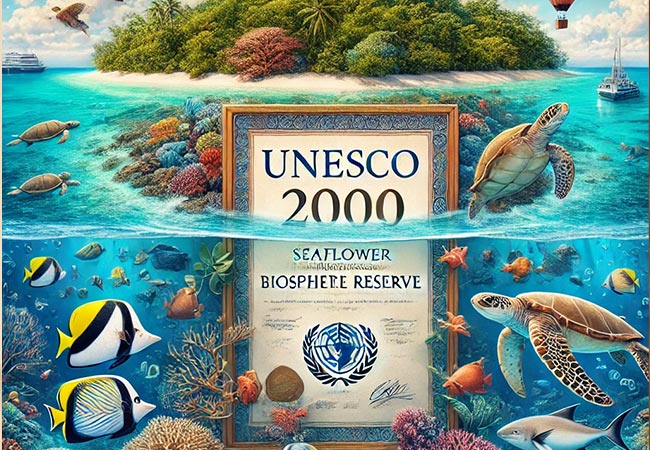
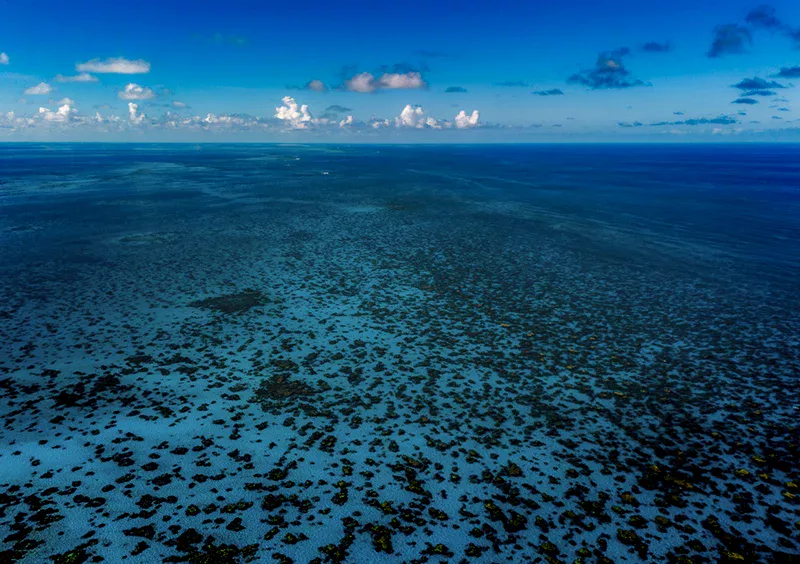
The Seaflower Biosphere Reserve, recognized by UNESCO in 2000, is one of the most extensive marine protected areas in the Western Hemisphere. It is located in the Archipelago of San Andrés, Providencia and Santa Catalina, at the far edge of the Caribbean Sea.
The raizal people
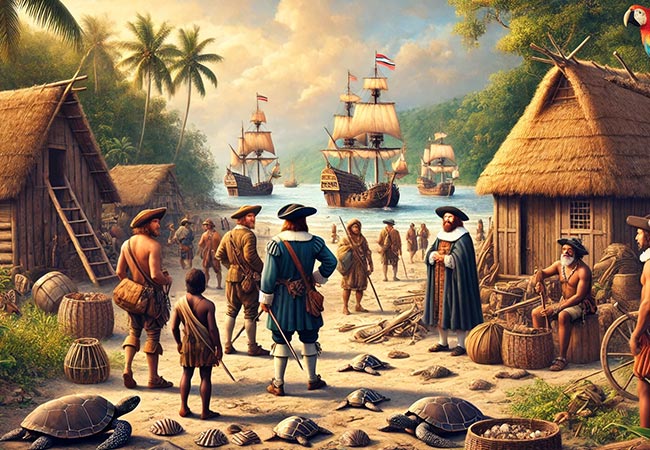
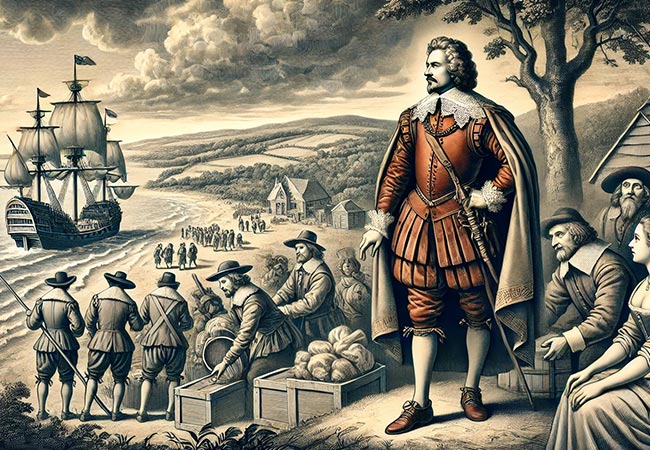
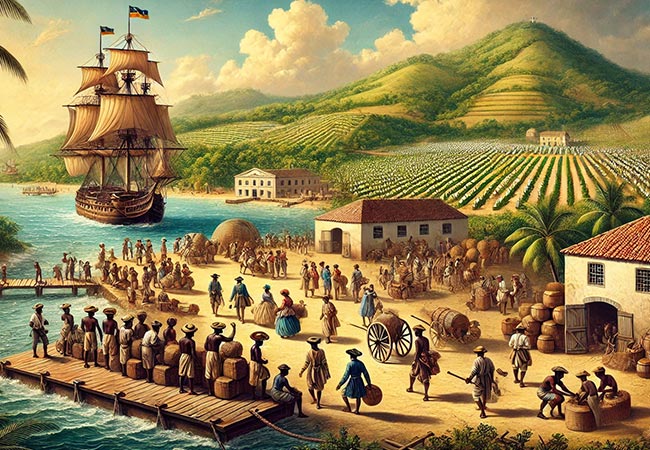
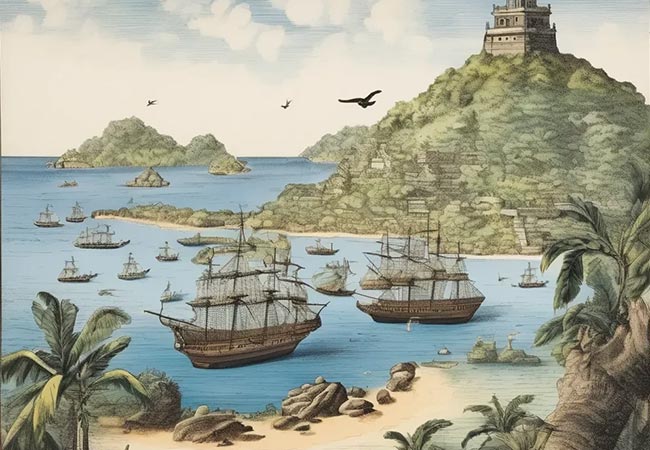
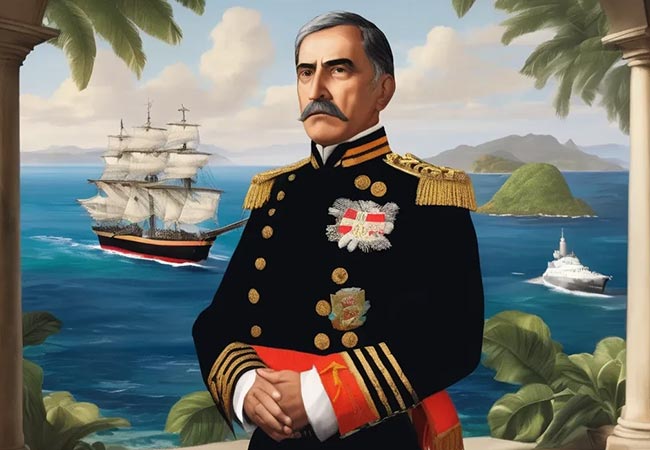
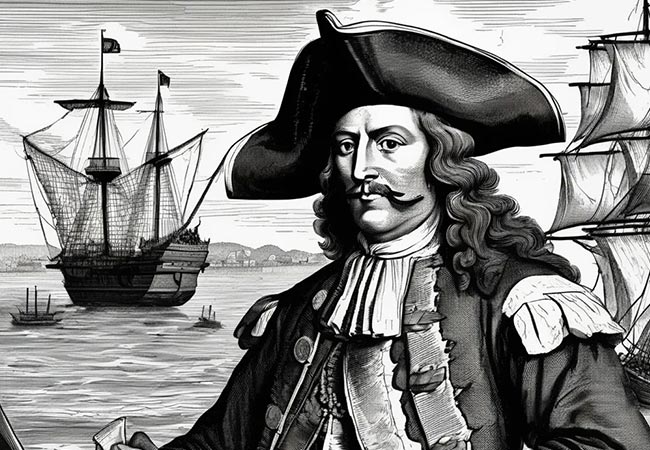
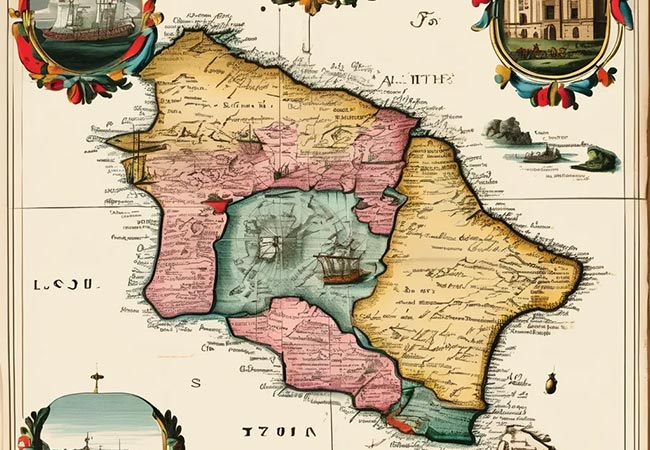
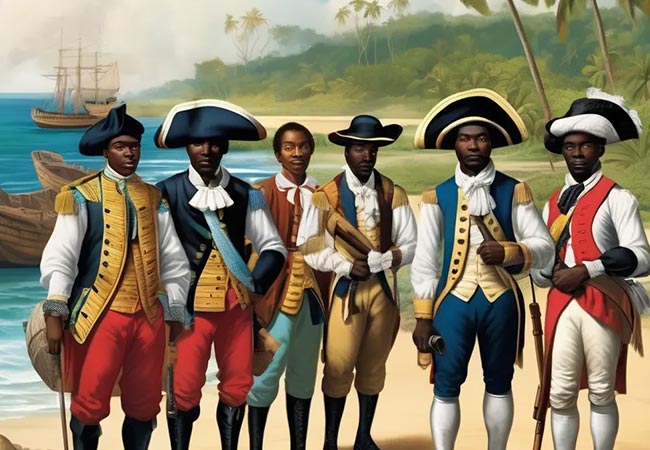
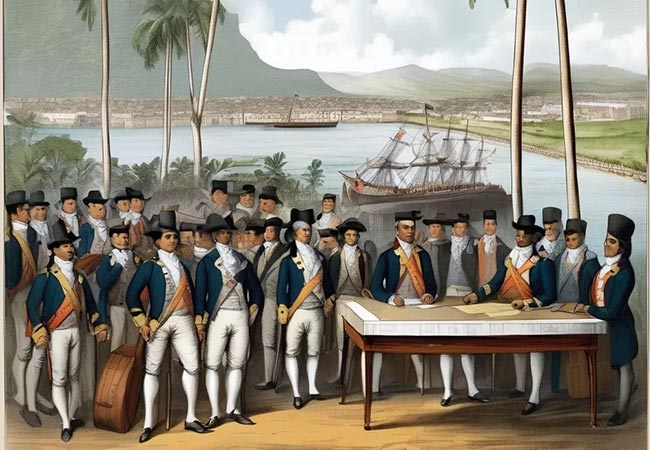
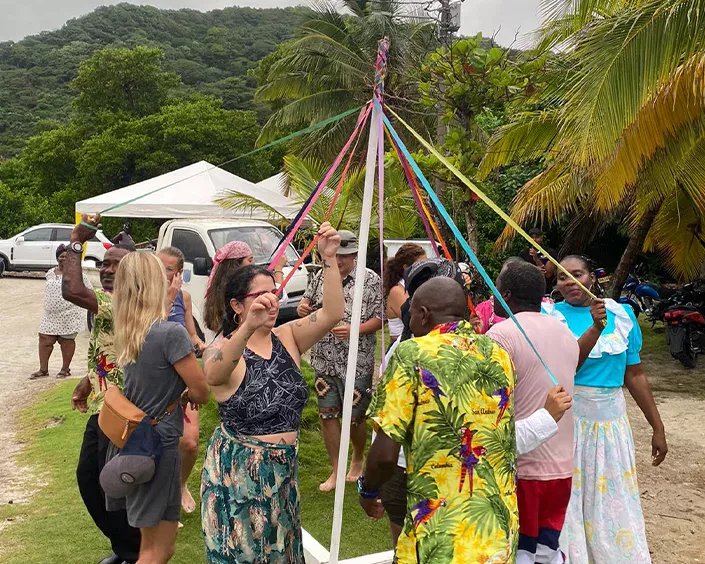
The Raizal community of Providencia is a unique blend of cultures: Miskito indigenous traditions, African ancestral heritage, and the influence of European settlers who arrived as Puritans, pirates, privateers, and buccaneers.
Our culture
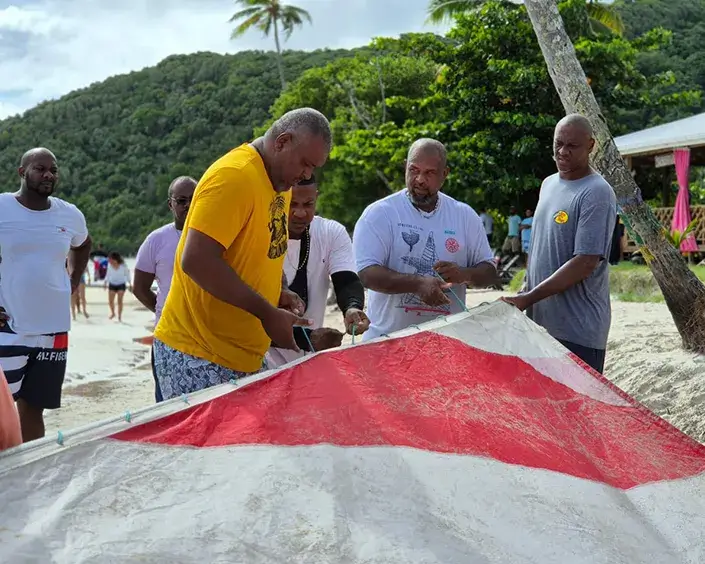
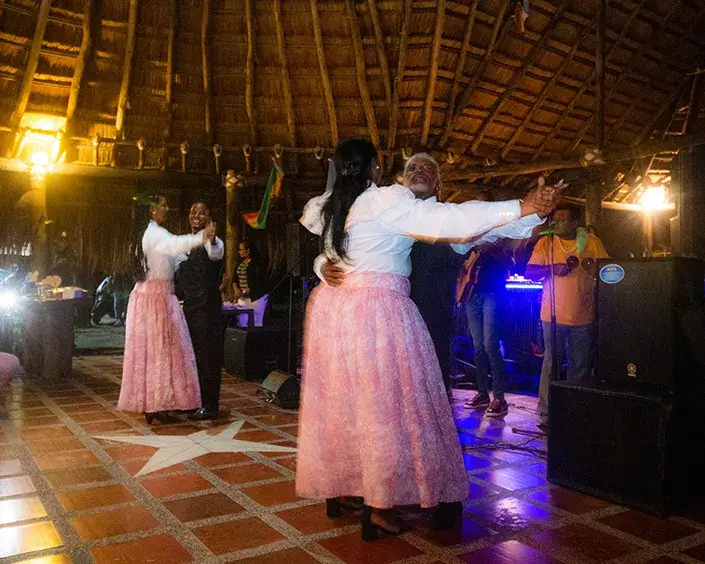
The Raizal people’s deep roots are reflected in their music, cuisine, crafts, dances, religion, fishing, and agriculture. The community lives in harmony with nature, which remains the supreme authority on these islands. The water and the wind, regardless of their origin, set the rhythm of life in Providencia.
Our nature
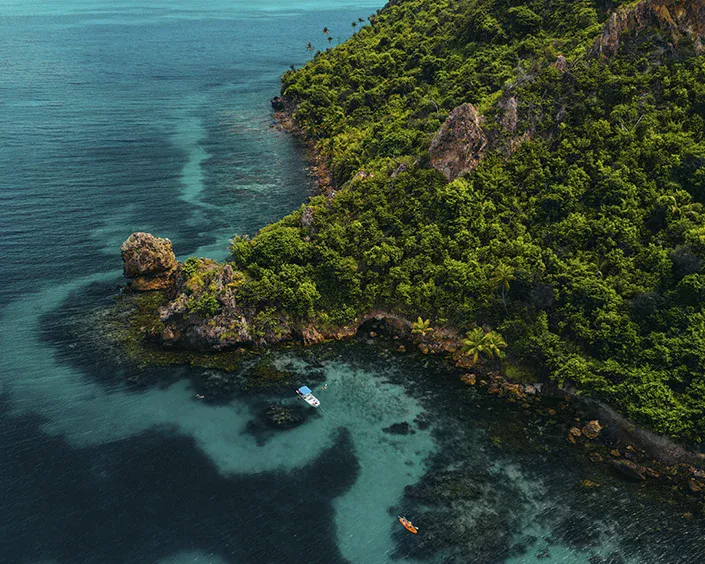
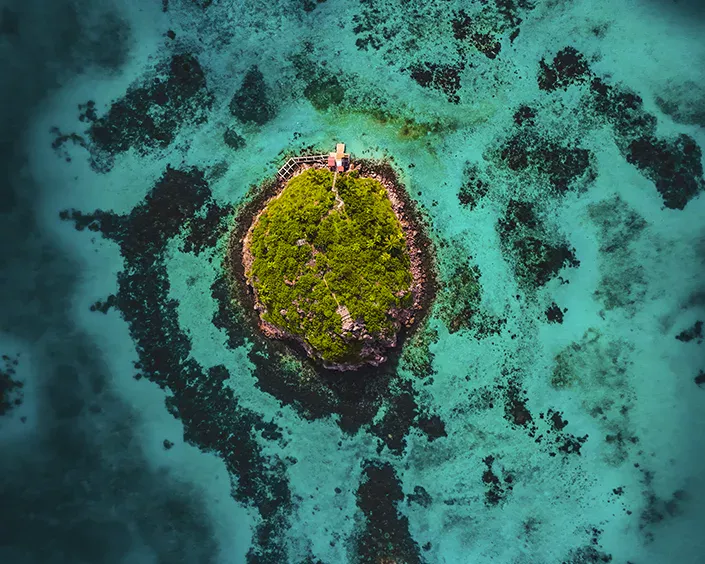
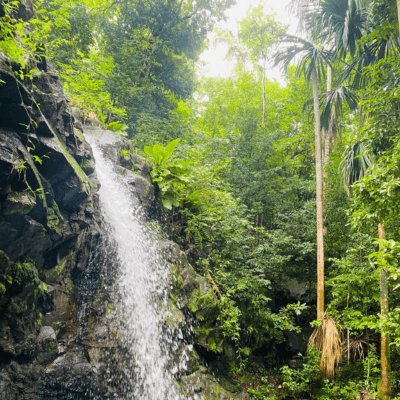
Providencia and Santa Catalina are surrounded by diverse ecosystems: mangroves, coral formations, seagrass meadows, and areas of tropical dry forest. These landscapes make the islands an unparalleled destination for natural exploration.
Our land
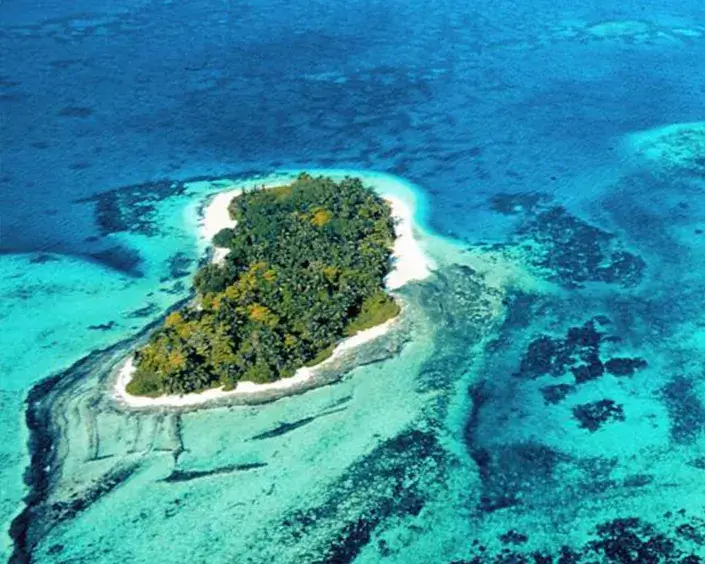
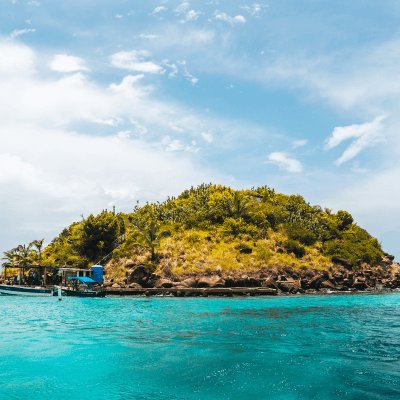
Volcanic in origin, the islands are blessed with abundant freshwater flowing from peaks to the sea. The forests are home to an incredible variety of medicinal, aromatic, and timber plants, along with flowers, fruits, and a rich biodiversity. Endemic and migratory birds find refuge here, as do reptiles and other animals like lizards and land turtles. Neighboring keys, such as Tres Hermanos, are home to a large colony of frigatebirds, locally known as “man of war.”
The black crab
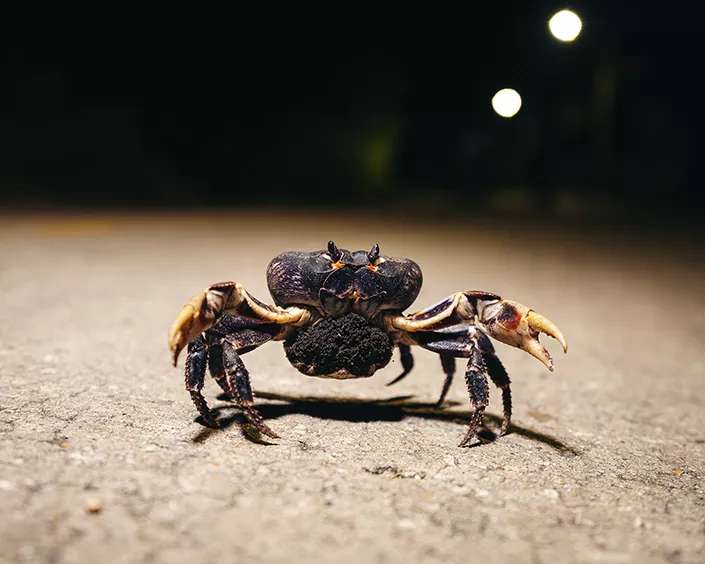
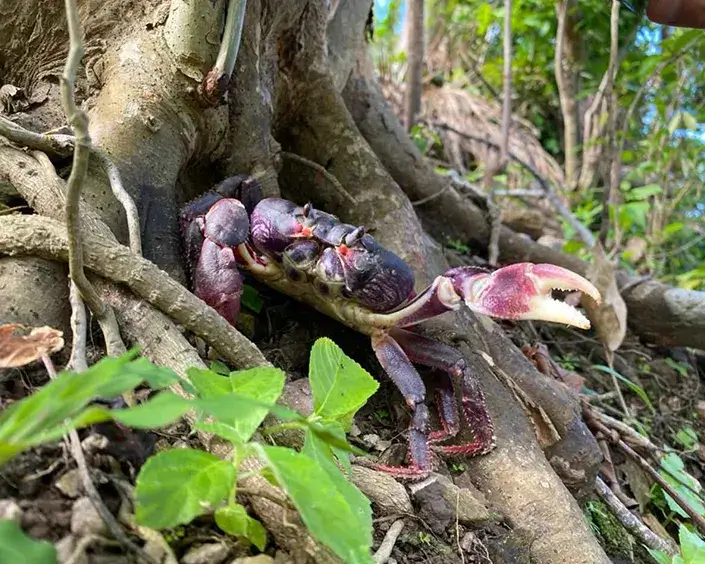
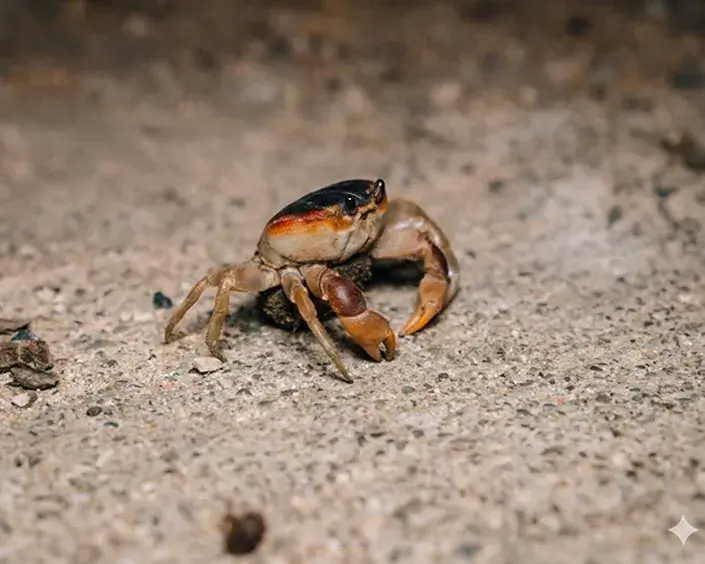
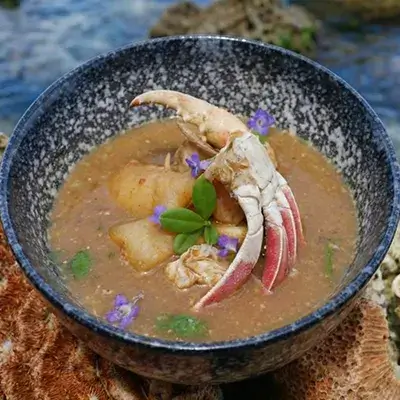
Since 2000, the black crab has been the emblematic species of the Archipelago, unique to the tropical dry forests of the Seaflower Biosphere Reserve. This species is crucial for the ecological balance and Raizal cuisine. CORALINA enforces an annual closed season from April to July to ensure its conservation.
In the sea
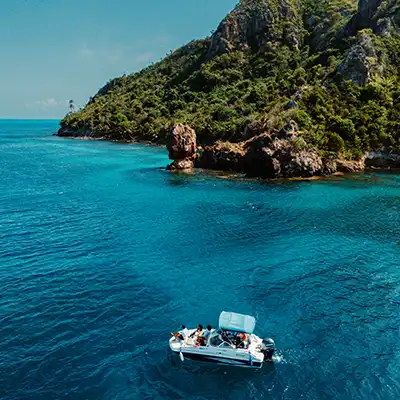
This Caribbean paradise hosts one of the richest biodiversities in the Western Hemisphere. To guarantee ecological balance and sustainability, official closed seasons are established. These are periods during which the capture, transport, and commercialization of certain species are prohibited during their most vulnerable stages.
Our richness
The raizal people
The Raizal community of Providencia is a unique blend of cultures: Miskito indigenous traditions, African ancestral heritage, and the influence of European settlers who arrived as Puritans, pirates, privateers, and buccaneers.
The Seaflower Biosphere Reserve, recognized by UNESCO in 2000, is one of the most extensive marine protected areas in the Western Hemisphere. It is located in the Archipelago of San Andrés, Providencia and Santa Catalina, at the far edge of the Caribbean Sea.
Our culture
The Raizal people’s deep roots are reflected in their music, cuisine, crafts, dances, religion, fishing, and agriculture. The community lives in harmony with nature, which remains the supreme authority on these islands. The water and the wind, regardless of their origin, set the rhythm of life in Providencia.
Our nature
Providencia and Santa Catalina are surrounded by diverse ecosystems: mangroves, coral formations, seagrass meadows, and areas of tropical dry forest. These landscapes make the islands an unparalleled destination for natural exploration.
Our land
Volcanic in origin, the islands are blessed with abundant freshwater flowing from peaks to the sea. The forests are home to an incredible variety of medicinal, aromatic, and timber plants, along with flowers, fruits, and a rich biodiversity. Endemic and migratory birds find refuge here, as do reptiles and other animals like lizards and land turtles. Neighboring keys, such as Tres Hermanos, are home to a large colony of frigatebirds, locally known as “man of war.”
The black crab
Since 2000, the black crab has been the emblematic species of the Archipelago, unique to the tropical dry forests of the Seaflower Biosphere Reserve. This species is crucial for the ecological balance and Raizal cuisine. CORALINA enforces an annual closed season from April to July to ensure its conservation.
In the sea
This Caribbean paradise hosts one of the richest biodiversities in the Western Hemisphere. To guarantee ecological balance and sustainability, official closed seasons are established. These are periods during which the capture, transport, and commercialization of certain species are prohibited during their most vulnerable stages.
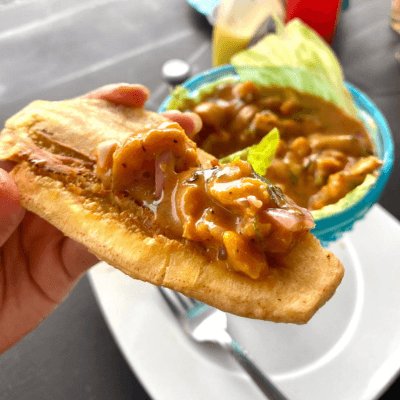
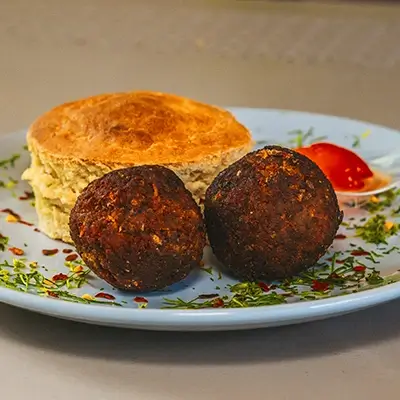
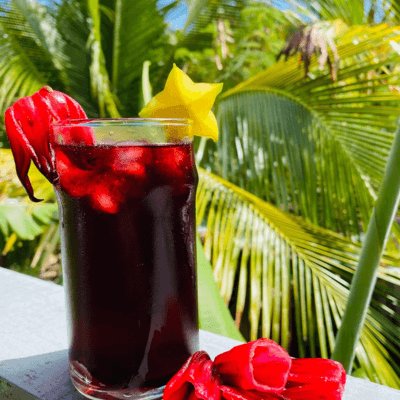
Gastronomy
Enjoy Providencia while protecting it
Providencia is a breathtaking island in the Colombian Caribbean, celebrated for its natural beauty, vibrant Afro-Caribbean culture, and commitment to sustainability.
Beach and sea
Discover more experiences
Sun and beach
Sports
Culture
Nature
Gastronomy
Discover more experiences
Sun and beach
Sports
Culture
Nature
Gastronomy
Subscribe to our newsletter
Local tips, scenic routes, island flavors, and authentic experiences.